|
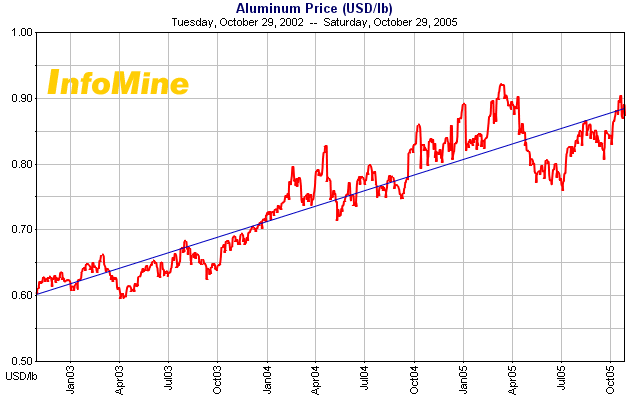
The price of aluminum over the past several years has been on a virtual straight line path along with the price of most other commodities. While The Commodity Investor believes fundamentals will continue to lift the price of all commodities, examining the supply and demand characteristics of each commodity can help us better predict which ones are more likely to outperform over the next 10-15 years.
Bauxite from these mines is then sent to a refinery, where it is turned into alumina. While Australia dominates the production of alumina, Guinea currently produces less than 1% of the world's alumina needs, despite having enormous reserves of bauxite. At today's levels, the amount of bauxite in Guinea will last over 1000 years. Guinea is to aluminum the way Athabasca is to oil. Please see: Bauxite Reserves By Country. There have been no new refineries built in the world in the past 20 years. Once alumina is made, it is shipped to a smelter to turn it into aluminum. There are currently around 180 smelters in the world. This process is extremely energy intensive and most smelters have their own power plants that do nothing but supply energy for the production of aluminum. This makes the price of aluminum extremely dependant on the cost of energy. With the high cost of oil and natural gas, many smelters are being squeezed by those whose energy is provided in a different form. Hydroelectric plants currently supply the power for over 50% of these smelters. When considering whether or not to invest in Aluminum, there are three main factors to consider. One, is the supply for transportation products such as automobiles and planes. Aluminum, because of its low weight and high strength is the material of choice for most of these goods. Automobiles, especially, are a cyclical industry, doing well when times are good, and hurting when times are bad. This makes the demand for aluminum a commodity that is dependant on the business cycle. The Commodity Investor believes 2006 will be a slow year economically, reducing the demand for goods such as automobiles, and hence reducing demand for aluminum. The second factor to consider is Guinea's impact on the market. While Guinea's bauxite reserves are greater than 10 times the amount of bauxite in all of China, they mine virtually the same amount of bauxite each year. If these reserves can be exploited, Guinea's may become one of the great economic powers in all of Africa. Much of this, and hence the supply of bauxite, will depend on the political situation in that country. Global Alumina Inc. is attempting to make reality of this situation by building a new refinery right next to a mine in Guinea. Already it has worked out agreements with the government to finish this project by 2010. With lots of cheap labor available, Global Alumina's refinery may one day become one of the most profitable in the industry. This is, however, not going to impact the market for another several years. The third factor is alternative supplies of aluminum, specifically the ability to recycle used packaging materials and car parts. 70% of the aluminum ever produced is still in existence, and recycling of these products is far less expensive than producing new material. If the price of aluminum continues to go up, The Commodity Investor expects a return to recycling incentives. With so much old aluminum remaining, recycling has the ability to cap the price of aluminum in the long run. While aluminum will participate in the commodities boom over the next 10-15 years, the outlook for the next 2 years is towards the downside. Look for a bottom sometime in 2007, and then a small investment in aluminum can be warranted. Aluminum is a strong, conservative investment for the long term commodities investor.
|